
Introduction: Google Search Is No Longer Just About Rankings
Google search no longer functions as a simple directory of ranked web pages. What began as a keyword-matching system has evolved into an AI-powered platform capable of interpreting complex questions, evaluating content quality, and generating synthesized responses.
Artificial intelligence now influences nearly every stage of the search experience. Traditional blue links still exist, but they increasingly share space with featured snippets, knowledge panels, and AI-generated summaries that answer queries directly. In many cases, users find what they need without clicking at all.

For businesses that depend on organic visibility, this shift matters. Understanding how Google’s AI systems developed—and where they are headed—provides the foundation for search engine optimization strategies that remain effective as search continues to change.
The Early Days: Keyword Matching and Rule-Based Search
Before AI played a role in search, ranking systems relied on relatively simple rules. Algorithms looked for exact keyword matches and used backlinks as a primary measure of authority. If a page contained the right terms and attracted enough links, it ranked.
This approach worked at scale but struggled with nuance. Keyword-heavy pages often outranked genuinely helpful resources. Synonyms, context, and user intent were largely ignored, leading to results that technically matched queries but failed to satisfy users.
| Early Search Factor | How It Worked | Key Limitation |
|---|---|---|
| Keyword density | Counted exact term usage | Ignored meaning and context |
| PageRank | Measured link quantity | Vulnerable to manipulation |
| Meta tags | Read declared keywords | Easily abused |
| Exact-match domains | Prioritized keyword URLs | Rewarded tactics over relevance |
SEO during this period focused on exploiting algorithmic gaps rather than serving users. While effective in the short term, the model produced declining search quality—creating the conditions that made AI-driven improvements necessary.
The Introduction of RankBrain: Google’s First Major AI Leap
In 2015, Google introduced RankBrain, its first large-scale application of machine learning within core search. Unlike rule-based systems, RankBrain could identify patterns and relationships without being explicitly programmed for every scenario.
RankBrain was built to handle unfamiliar and ambiguous search queries—searches Google had never seen before. Instead of relying on exact phrasing, it evaluated conceptual similarity and user behavior to infer intent.
This marked a shift from literal matching to semantic understanding. Pages no longer needed to repeat exact keywords to rank; they needed to address the underlying topic. For SEO, this reduced the effectiveness of keyword stuffing and increased the value of comprehensive, intent-focused content.
RankBrain laid the groundwork for modern search by proving that relevance could be inferred—not just counted.
BERT and the Rise of Natural Language Understanding
Google’s deployment of BERT in 2019 significantly improved its ability to understand natural language. BERT evaluates words in relation to the surrounding sentence, allowing Google to interpret nuance, modifiers, and conversational phrasing.
This mattered because many searches hinge on small linguistic details. Queries that previously returned broad or inaccurate results suddenly became precise. Long-tail and conversational searches improved dramatically.
The practical impact was clear: content written naturally for humans began outperforming content engineered for algorithms. Sentence structure, clarity, and coherence mattered more than mechanical optimization. BERT reinforced a core principle—writing clearly for users is also the most effective way to perform in AI-driven search.
MUM and Multimodal Search Capabilities
With MUM, introduced in 2021, Google expanded beyond text-only understanding. MUM can analyze information across languages and formats, including images and video, and synthesize insights across them.
| Capability | Application | SEO Implication |
|---|---|---|
| Cross-language understanding | Uses non-English sources | Increased global competition |
| Multimodal analysis | Evaluates images and video | Visual quality matters |
| Complex query handling | Solves multi-part questions | Depth outperforms narrow pages |
| Subtopic recognition | Identifies related needs | Topic coverage gains importance |
Search became less about finding a page and more about solving a problem. Thin or single-angle content struggled, while comprehensive resources gained ground. Sites that invested in depth, clarity, and supporting media found new paths to visibility.
The Shift Toward Generative Search Experiences
Generative AI represents the most significant shift in search behavior to date. Rather than ranking content alone, Google now synthesizes information from multiple sources into direct answers.

This changes the economics of organic traffic. Users may receive complete responses without visiting any site. Visibility increasingly comes from being referenced rather than clicked.
For publishers, this requires a mindset shift. Appearing as a trusted source within AI-generated responses can matter as much as ranking on page one. Content that demonstrates expertise, clarity, and authority is more likely to be cited—even if it doesn’t receive the click.
What Generative Search Means for SEO
Generative search doesn’t eliminate SEO, but it redefines success. Rankings alone no longer guarantee traffic. A page can rank first and still be bypassed if AI provides a sufficient answer directly.
To remain competitive, content must be easy to interpret, accurate, and complete. Clear structure supports AI extraction, while authority and expertise influence whether content is trusted enough to reference.
SEO now includes visibility within AI-generated responses, not just traditional listings. Measurement must evolve accordingly.
How Google Evaluates Content in an AI-Driven Search Environment
Google’s AI systems evaluate content holistically. Accuracy and consistency form the baseline—errors undermine trust across an entire site. Pages are also evaluated in context, not isolation. Demonstrating topical depth across a subject area matters more than publishing disconnected articles.
Expertise and firsthand experience remain critical. AI systems are increasingly effective at filtering redundant or low-value content, making originality and substance more important than volume.
The Role of Authority and Trust in AI-Powered Search
Authority signals have become more nuanced. Backlinks still matter, but relevance and context outweigh raw quantity. Brand reputation, consistent publishing, and user engagement reinforce trust.
Original insights carry particular weight. Content that adds something new—data, perspective, experience—is more likely to be cited. Clear authorship and accountability further strengthen credibility, especially in environments where AI selects sources to reference.
How AI Is Changing the Definition of “Ranking”
Visibility now extends beyond numbered positions. Featured snippets, knowledge panels, AI overviews, and citations all represent exposure without a traditional ranking.
Personalization and dynamic responses make static rank tracking less reliable. A response citing your content today may change tomorrow. Measuring modern SEO performance requires tracking visibility across multiple formats, not just keyword positions.
What Businesses Should Do to Adapt
Businesses should focus on producing accurate, comprehensive content that serves clear user intent. Consolidating overlapping pages strengthens authority, while internal linking reinforces topical relationships.
Optimizing for intent rather than syntax aligns content with how users search—and how AI interprets queries. Long-term investment in quality consistently outperforms short-term tactics as AI systems grow more sophisticated.
| Priority | Action | Expected Impact |
|---|---|---|
| High | Audit content for accuracy | Improved trust |
| High | Consolidate thin pages | Stronger authority |
| Medium | Add structured data | Better AI extraction |
| Medium | Publish original insights | Increased citation |
| Ongoing | Monitor AI visibility | Adaptive strategy |
How This Evolution Connects to AI Optimization (AIO)
AI Optimization extends SEO into an AI-first environment. While SEO ensures discoverability and indexability, AIO focuses on how content is interpreted, trusted, and referenced.
Structured, intent-driven content supports both rankings and generative visibility. SEO and AIO are complementary—technical foundations enable access, while AIO ensures content is usable by AI systems once discovered.
Final Thoughts: Preparing for the Future of Google Search
Google’s trajectory—from RankBrain to generative search—points toward increasingly intelligent systems that prioritize meaning, trust, and usefulness.
The fundamentals haven’t changed. Quality still wins. What’s changed is how quality is evaluated and rewarded. Businesses that invest early in clarity, expertise, and structure gain advantages that compound over time.
Search is no longer about gaming algorithms. It’s about earning trust—both from users and the AI systems that serve them.
Introduction: Why AI Optimization Matters in Modern SEO
Web and search engines no longer evaluate content the way they did even a few years ago. While keywords and backlinks still matter, they’re no longer the primary way search systems determine relevance. Today, AI and machine learning play a central role in interpreting context, intent, and meaning behind queries.
This shift has changed how users interact with search results. AI-powered summaries and answer-style results often appear before traditional organic listings, and in many cases users get what they need without clicking at all. Content that isn’t easy for AI systems to interpret risks being bypassed—even if it’s technically sound.

AI Optimization exists to address this gap. It doesn’t replace search engine optimization fundamentals. Instead, it adapts them to how modern search engines actually process and surface information.
What Is AI Optimization (AIO)?
AI Optimization is the practice of structuring content so AI systems can clearly understand what a page is about, who it’s intended for, and when it should appear in search results. Unlike traditional optimization approaches that emphasize keyword usage, AIO focuses on clarity, topical completeness, and alignment with user intent.
At a practical level, AIO helps content perform well in environments where search engines summarize, compare, and synthesize information rather than simply ranking pages. Technical SEO and authority signals still matter, but AIO improves how content is interpreted once it’s indexed.
To illustrate how AI evaluates content, the table below shows the types of questions AI systems implicitly assess when deciding what to surface:
| Question AI Systems Ask | What It Means for Your Content |
|---|---|
| What is this page about? | Clear topic focus and coherent coverage |
| Who created it? | Visible expertise and credibility |
| Is it accurate? | Consistency with established knowledge |
| Does it answer the query? | Direct alignment with user intent |
| Can it be summarized? | Structured, quotable information |
How AIO Is Different From Traditional SEO
Traditional SEO has historically focused on optimizing individual pages around specific keywords. Success was measured largely through rankings, impressions, and traffic, with an emphasis on backlinks, metadata, and technical performance. Each page functioned as a standalone asset competing for a defined set of terms.
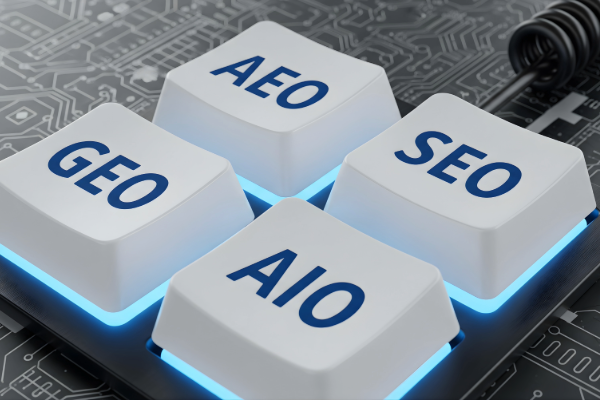
AI Optimization shifts that perspective. Instead of asking whether a page can rank for a keyword, AIO asks whether an AI system can confidently understand and trust the content enough to surface it as part of an answer. Semantic relevance, context, and topical authority matter more than exact phrasing.
This distinction matters because AI systems don’t evaluate content the way traditional ranking algorithms did. Natural language processing allows them to recognize related concepts, synonyms, and intent without relying on exact matches.
Why Search Engines Are Moving Toward AI-Driven Results
The move toward AI-driven search reflects how people actually search today. Queries are increasingly conversational, ambiguous, and context-dependent. Keyword matching alone can’t reliably interpret what users mean, especially when they don’t know the precise terminology for what they’re looking for.
AI allows search engines such as Google Search to interpret intent and synthesize information from multiple trusted sources into cohesive answers. At the same time, user expectations have shifted toward faster, more direct responses. Rather than scrolling through links, users increasingly expect search to deliver immediate clarity.
As a result, content value is now tied closely to how easily AI systems can extract, verify, and summarize information. Pages that are shallow, unclear, or poorly structured become harder for AI to use.
Key Components of AI Optimization
Search Intent Alignment
AI systems perform best when a page serves a clear purpose and accurately understands search queries purpose and intent. Content that tries to be informational, transactional, and promotional at the same time often creates ambiguity. When intent is clear—reinforced through headings, structure, and messaging—AI systems can more accurately determine when that content should appear.
Topical Authority and Entity Coverage
Rather than evaluating pages in isolation, AI systems assess whether a site demonstrates meaningful coverage of a topic. Comprehensive resources supported by related subtopics signal expertise more effectively than many thin pages targeting individual keywords. Internal linking plays an important role in reinforcing these relationships.
Content Structure and Clarity
Structure directly affects interpretability. Logical headings, concise paragraphs, and clear explanations help AI systems understand how information is organized. Lists, definitions, and examples make content easier to summarize and reference, benefiting both users and machines.
Credibility and Trust Signals
AI systems rely heavily on trust signals when deciding what to surface. Clear authorship, factual accuracy, and consistency with established knowledge all influence whether content is treated as reliable. These signals align closely with long-standing SEO principles around expertise and authority.
How AIO Impacts Content Creation
Content optimized for AIO is written to explain, not just to rank. AI systems increasingly reward content that genuinely helps users understand a topic rather than content created solely for search visibility.
AI tools can support research and drafting, but human oversight remains essential. Content that lacks original insight or real-world perspective often blends in with everything else AI systems already know. Over time, quality and clarity outperform volume, making fewer comprehensive resources more effective than large libraries of thin pages.
How AIO Impacts Keyword Strategy
Keywords still matter, but they function more as signals than targets. In an AIO framework, keyword research helps define what a topic should cover rather than dictating exact phrasing. Topic clusters replace single-keyword pages, and natural language variations matter more than repetition.
| Traditional Keyword Strategy | AIO-Oriented Strategy |
|---|---|
| Optimize for exact matches | Optimize for topic understanding |
| One keyword per page | One topic per resource |
| Separate pages for variations | Consolidated authoritative content |
| Track individual rankings | Track topic-level visibility |
This shift mirrors how AI systems interpret meaning rather than strings of text.
Is AIO Replacing SEO?
AIO does not replace SEO—it builds on it. Technical SEO still determines whether content can be crawled and indexed. Backlinks still signal authority and trust. What AIO adds is a focus on how content is interpreted once it’s accessible.
The most effective strategies combine both. A technically sound site with unclear content won’t perform well in AI-driven environments, just as well-written content can’t succeed without proper technical foundations.
Common Misconceptions About AI Optimization
AIO is often misunderstood as publishing AI-written content, abandoning SEO, or relying on a specific tool. In reality, AIO is a strategic approach to content clarity and structure. Tools can assist, but they don’t replace thoughtful planning or editorial judgment.
Small and mid-sized businesses can benefit just as much as large enterprises. Clear structure, accurate information, and intent alignment don’t require massive budgets—just discipline.
How Businesses Should Start Thinking About AIO
The best starting point is existing content. Reviewing pages for clarity, intent, and completeness often produces faster results than creating new material. Consolidating overlapping pages, improving structure, and answering real user questions thoroughly all strengthen AI visibility over time.
AI tools can support analysis and research, but strategic decisions—what to prioritize, what to combine, and how to position content—remain human responsibilities.
How Horton Digital Approaches AI Optimization
At Horton Digital, AIO is treated as part of modern SEO, not a separate service. AI tools are used to accelerate research and surface insights, while strategy and quality control remain human-led. The focus is on building durable visibility through content that serves users and aligns with how search systems operate today.
Final Thoughts: AIO as the Future of Sustainable SEO
AI Optimization reflects how major search engines already work. As AI-generated summaries and answer-driven results become more common, content that AI systems can clearly understand and trust gains a lasting advantage.
The fundamentals haven’t changed—clarity, usefulness, and expertise still win. What has changed is the precision required to execute them well. AIO isn’t a replacement for SEO; it’s the next stage of doing it properly.